Laisser un message
Si vous êtes intéressé par nos produits et souhaitez en savoir plus, veuillez laisser un message ici, nous vous répondrons dès que possible.

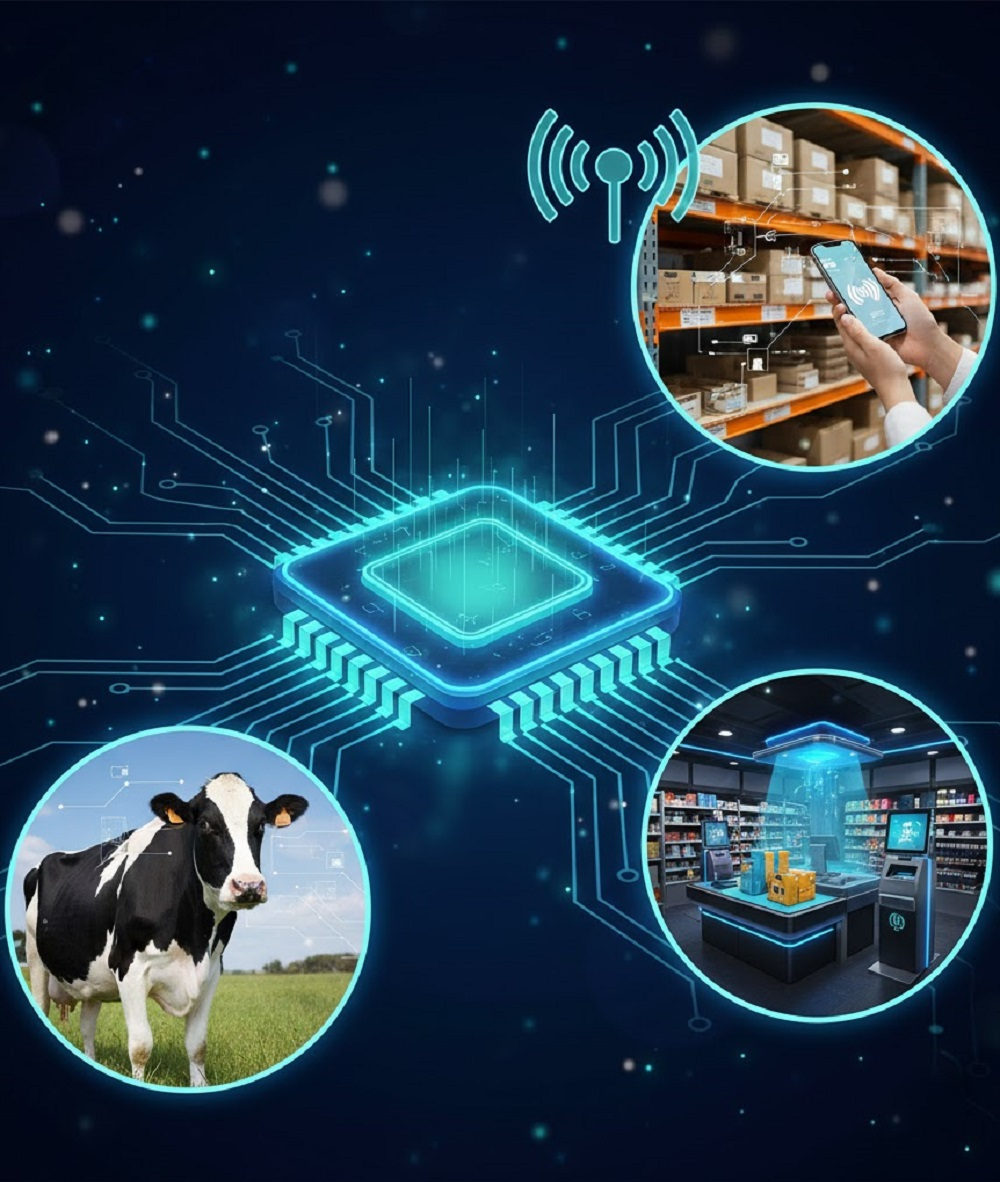
La RFID s'impose comme une infrastructure essentielle dans le commerce de détail et l'agroalimentaire modernes. Contrairement aux codes-barres traditionnels, la RFID permet l'identification automatique et sans contact visuel de plusieurs articles simultanément. Selon les rapports de GS1 et McKinsey, l'adoption de la RFID dans le commerce de détail peut accroître la précision des stocks d'environ 63 % à plus de 95 %, améliorant ainsi considérablement le réapprovisionnement et la visibilité de la chaîne d'approvisionnement. Pour les entreprises du secteur alimentaire, la RFID facilite également la traçabilité, le contrôle de la chaîne du froid et la gestion des dates de péremption, autant d'éléments indispensables au respect des normes de sécurité et à l'efficacité opérationnelle.
Applications RFID dans le commerce de détail
Précision des stocks et visibilité en temps réel
Les détaillants sont constamment confrontés à des problèmes d'exactitude des stocks. Les erreurs de comptage entraînent des pertes de ventes, des surstocks et une expérience client dégradée. La RFID résout ce problème en permettant un comptage cyclique rapide. Le personnel peut scanner des centaines d'articles par seconde à l'aide de lecteurs portables, sans avoir à ouvrir les cartons ni à scanner manuellement les codes-barres. Des études menées par le laboratoire RFID de l'université d'Auburn montrent que les détaillants de vêtements utilisant la RFID atteignent une précision d'inventaire supérieure à 95 %, contre environ 60 à 70 % pour les systèmes à codes-barres. Cette amélioration a un impact direct sur le chiffre d'affaires.
Pour le commerce de détail omnicanal, la RFID permet également aux entreprises de prendre en charge les modèles d'achat en ligne et de retrait en magasin (BOPIS) avec une visibilité fiable des stocks.
Prévention des pertes et protection antivol
Les pertes liées à la démarque inconnue représentent un coût majeur pour le commerce de détail. La Fédération nationale du commerce de détail (NRF) estime que ces pertes dépassent 100 milliards de dollars par an à l'échelle mondiale. La RFID contribue à la prévention de ces pertes grâce à l'intégration de la surveillance électronique des articles (EAS) et au suivi des actifs en temps réel.
Les étiquettes RFID modernes peuvent déclencher des alarmes aux sorties des magasins tout en stockant les données d'identification des produits. Contrairement aux étiquettes de sécurité traditionnelles, les étiquettes RFID permettent aux détaillants de suivre les déplacements des produits, de détecter les sorties inhabituelles et de consulter l'historique des stocks.
Les grandes enseignes comme Decathlon et Zara ont intégré la technologie RFID à la quasi-totalité de leurs vêtements. Ces déploiements contribuent à réduire les pertes tout en améliorant la gestion des stocks et le fonctionnement des magasins.
Applications RFID dans la gestion alimentaire
Traçabilité et sécurité des aliments
Les chaînes d'approvisionnement alimentaire sont complexes et souvent mondiales. Les défaillances en matière de traçabilité peuvent entraîner des rappels de produits coûteux et des risques pour la sécurité alimentaire. La RFID permet un suivi précis de chaque article, de la production à la vente au détail.
La technologie RFID permet d'identifier rapidement les lots contaminés. Au lieu de rappeler des lignes de produits entières, les entreprises peuvent isoler des palettes, des lots ou des articles spécifiques.
Par exemple, plusieurs exportateurs de produits de la mer en Asie utilisent la technologie RFID pour suivre l'origine des prises, la température de stockage et l'historique du transport. Cela permet de vérifier la conformité aux réglementations internationales en matière d'importation et d'améliorer la confiance des consommateurs.
Surveillance de la chaîne du froid
Le contrôle de la température est essentiel pour les denrées périssables comme la viande, les produits laitiers et les produits pharmaceutiques. Les capteurs RFID permettent d'enregistrer la température, l'humidité et la durée du transport tout au long de la chaîne du froid.
Une étude de Deloitte sur la logistique alimentaire révèle que jusqu'à 30 % des denrées périssables sont perdues chaque année dans le monde en raison des inefficacités de la chaîne d'approvisionnement et des variations de température. La surveillance par RFID permet de détecter rapidement les anomalies.
Lorsqu'un envoi dépasse les seuils de température de sécurité, le système peut déclencher automatiquement des alertes. Les équipes logistiques peuvent alors réacheminer les produits, ajuster la réfrigération ou mettre en quarantaine les articles contaminés avant qu'ils n'atteignent les consommateurs.
Avantages opérationnels pour les entreprises
Opérations plus rapides et efficacité de la main-d'œuvre
Dans un environnement de vente au détail classique, les inventaires basés sur les codes-barres peuvent prendre de 40 à 60 heures par magasin, tandis que les inventaires RFID peuvent être effectués en 2 à 3 heures. Cette amélioration opérationnelle permet au personnel de se concentrer sur le service client et la mise en valeur des produits plutôt que sur des tâches de scan répétitives. À terme, les économies de main-d'œuvre peuvent compenser les coûts de déploiement de la RFID. De plus, la technologie RFID prend en charge les caisses automatisées et les étagères intelligentes, ce qui réduit les temps d'attente et améliore l'expérience en magasin.
Prise de décision fondée sur les données
La RFID génère des données opérationnelles détaillées. Les détaillants bénéficient ainsi d'une visibilité accrue sur les mouvements de produits, leur temps de présence en rayon et les cycles de réapprovisionnement. Ces données peuvent être intégrées à des plateformes analytiques afin d'optimiser l'agencement des magasins et les prévisions de la demande. En matière de gestion alimentaire, les données RFID permettent de suivre les dates de péremption et d'appliquer des stratégies de tarification dynamique. Les produits proches de leur date limite de consommation peuvent ainsi bénéficier d'une réduction automatique afin de limiter le gaspillage.
Considérations relatives à la mise en œuvre
Coût, intégration et sélection des balises
Malgré ses avantages, le déploiement de la RFID exige une planification rigoureuse. Les entreprises doivent évaluer les types d'étiquettes, l'emplacement des lecteurs et l'intégration aux systèmes existants. Les étiquettes RFID UHF passives, couramment utilisées dans le commerce de détail, coûtent entre 0,05 et 0,15 $ l'unité à grande échelle. Les coûts d'infrastructure comprennent les lecteurs, les antennes et les plateformes logicielles. Cependant, de nombreuses entreprises amortissent ces coûts grâce à une meilleure précision des stocks et à une réduction des pertes.
Les déploiements réussis commencent généralement par des programmes pilotes, axés sur des catégories de produits à forte valeur ajoutée ou des segments à fortes pertes, avant d'être étendus à l'ensemble des opérations.
Conclusion
La RFID révolutionne la gestion du commerce de détail et de l'agroalimentaire en offrant une visibilité en temps réel, une traçabilité améliorée et une efficacité opérationnelle accrue. De la réduction des erreurs d'inventaire dans les magasins de vêtements au contrôle de la température dans les chaînes d'approvisionnement alimentaire, cette technologie répond à des enjeux opérationnels majeurs.
Face au renforcement des exigences réglementaires en matière de traçabilité et à la croissance continue du commerce omnicanal, l'adoption de la RFID devrait s'accélérer. Les entreprises qui mettent en œuvre la RFID de manière stratégique peuvent améliorer la transparence de leur chaîne d'approvisionnement, réduire leurs coûts opérationnels et renforcer la confiance de leurs clients, ce qui en fait une technologie précieuse pour le commerce moderne.


 Réseau IPv6 pris en charge
Chattez maintenant
Numériser vers Wechat :

Numériser vers WhatsApp :

 CATÉGORIES DE PRODUITS