Laisser un message
Si vous êtes intéressé par nos produits et souhaitez en savoir plus, veuillez laisser un message ici, nous vous répondrons dès que possible.

Les opérations d'entreposage et de logistique exigent un suivi précis, une gestion rapide des stocks et une collecte de données fiable. Face à la complexification croissante des chaînes d'approvisionnement, les systèmes de codes-barres traditionnels peinent souvent à répondre aux exigences de visibilité en temps réel et d'automatisation.
La technologie RFID offre une méthode plus efficace de gestion des stocks, des actifs et des expéditions en permettant l'identification automatique des articles sans numérisation manuelle.
Défis liés à la gestion des entrepôts et de la logistique
Les grands entrepôts nécessitent souvent des inventaires réguliers, mais le comptage manuel est long et source d'erreurs. Les systèmes de codes-barres requièrent une lecture directe.
Les rayonnages métalliques, les machines et les conteneurs peuvent perturber les signaux RFID classiques, ce qui rend nécessaire l'utilisation d'étiquettes spécifiques. Certains entrepôts sont également situés dans des environnements difficiles, comme des cours extérieures, des chambres froides ou des usines poussiéreuses, où les étiquettes standard peuvent ne pas être suffisamment résistantes.
De plus, les opérations logistiques nécessitent une grande distance de lecture, une numérisation en masse et une collecte de données fiable, notamment pour le suivi des palettes, des conteneurs ou des équipements se déplaçant entre différents sites.
Compte tenu de ces difficultés, le choix des étiquettes et des tags RFID appropriés est essentiel à la réussite des projets d'entrepôt.
Comment fonctionne la RFID dans les entrepôts et la logistique
Dans un système RFID d'entrepôt classique, chaque article, carton ou palette est muni d'une étiquette ou d'un tag RFID contenant un identifiant unique. Les lecteurs RFID installés aux entrées, sur les étagères, les convoyeurs ou les appareils portables peuvent détecter automatiquement les étiquettes sans contact direct. Cela permet une mise à jour en temps réel des informations d'inventaire, sans saisie manuelle. Plusieurs articles peuvent être scannés simultanément, ce qui améliore considérablement l'efficacité par rapport à la lecture de codes-barres.
Les systèmes RFID peuvent être intégrés aux WMS, ERP ou aux équipements d'automatisation pour prendre en charge les opérations modernes d'entrepôt et de logistique.
Applications typiques de la RFID dans l'entreposage et la logistique
Gestion des stocks
Les étiquettes RFID permettent un contrôle rapide des stocks sans ouvrir les cartons ni scanner chaque article individuellement. La lecture simultanée de plusieurs étiquettes rend le comptage des stocks plus rapide et plus précis.
Suivi des palettes et des conteneurs
Des étiquettes RFID peuvent être apposées sur des palettes, des conteneurs ou des caisses réutilisables afin de suivre leurs déplacements entre les différents emplacements d'un entrepôt. Cela permet de prévenir les pertes et d'améliorer l'efficacité logistique.
Suivi des actifs
Les équipements d'entrepôt tels que les chariots élévateurs, les outils et les machines peuvent être suivis grâce à des étiquettes RFID, permettant aux opérateurs de connaître leur emplacement et leur état d'utilisation.
Contrôle des expéditions et de la logistique
La technologie RFID peut être utilisée pour surveiller les marchandises pendant le chargement, le déchargement et le transport, réduisant ainsi les erreurs et améliorant la traçabilité.
Systèmes d'entrepôt automatisés
La technologie RFID fonctionne parfaitement avec les convoyeurs, les systèmes de tri et les systèmes de stockage automatisés, permettant la collecte de données en temps réel sans numérisation manuelle.
Étiquettes et marquages RFID recommandés pour l'entreposage et la logistique
Différents projets d'entrepôt nécessitent différents types d'étiquettes et de tags RFID en fonction de la distance de lecture, de l'environnement et de la surface de montage.
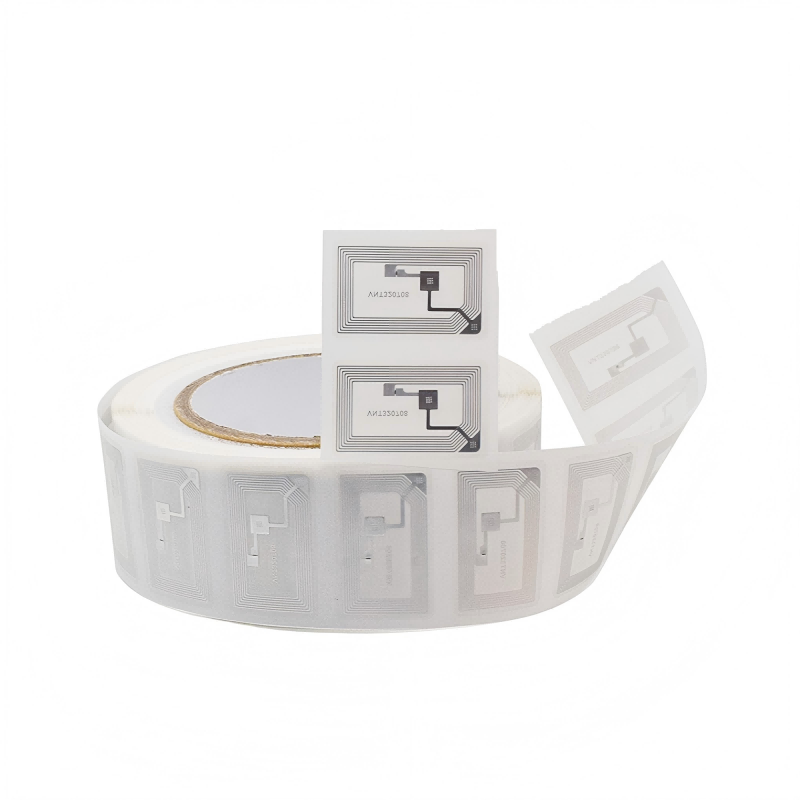
Les étiquettes RFID imprimables sont largement utilisées pour les cartons, les boîtes et le suivi des stocks. Légères, économiques et faciles à appliquer, elles peuvent être imprimées avec des codes-barres, des numéros de série ou des logos et intègrent une puce RFID.
Les étiquettes imprimables conviennent aux environnements d'entrepôt intérieurs où les articles doivent être suivis individuellement.
Les étiquettes RFID UHF offrent une portée de lecture accrue et prennent en charge le scan en masse, ce qui les rend idéales pour les systèmes de gestion des stocks et de logistique d'entrepôt. La lecture simultanée de plusieurs articles améliore l'efficacité dans les grands espaces de stockage.
Les étiquettes UHF sont couramment utilisées pour le suivi des palettes, le suivi des cartons et les systèmes d'entrepôt automatisés.
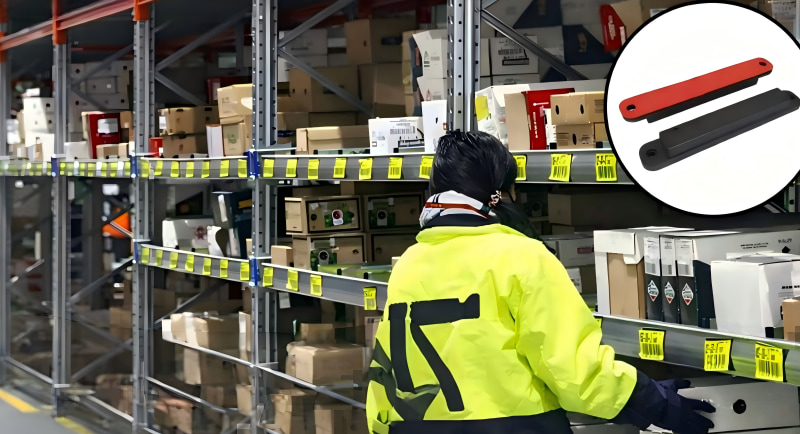
Lorsque des étiquettes RFID classiques sont fixées sur des supports métalliques, des machines ou des conteneurs, leur fonctionnement peut être altéré. Les étiquettes RFID anti-métal sont conçues pour garantir une performance optimale sur les surfaces métalliques.
Ces étiquettes sont souvent utilisées pour le suivi des outils, l'identification des rayonnages et la gestion des équipements dans les entrepôts industriels.
Les étiquettes RFID industrielles sont conçues pour les environnements difficiles où la durabilité est essentielle. Elles résistent à la chaleur, à la poussière, aux vibrations et aux intempéries.
Ces étiquettes conviennent aux entrepôts d'usines, aux parcs à conteneurs et au suivi des équipements lourds.
Étiquettes RFID spéciales pour la logistique
Certaines applications logistiques nécessitent des étiquettes de formes spécifiques, telles que des étiquettes pour palettes, des étiquettes pour câbles ou des étiquettes suspendues. Ces étiquettes sont conçues pour les conteneurs réutilisables, les scellés ou les articles qui ne peuvent pas utiliser d'étiquettes classiques.
L'utilisation du type d'étiquette approprié contribue à garantir des performances de lecture stables dans les projets d'entrepôt réels.
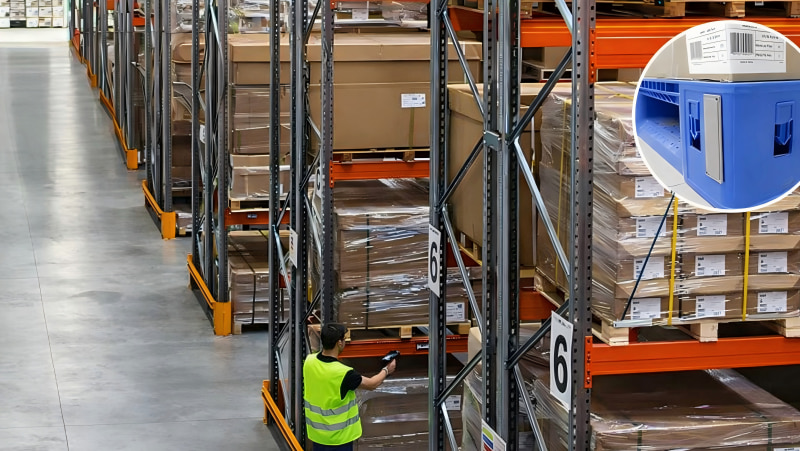
Comment choisir la bonne étiquette RFID pour les projets d'entrepôt et de logistique
Choisir la bonne étiquette RFID est une étape cruciale dans un projet d'entrepôt. Différents environnements et exigences système peuvent nécessiter différents types d'étiquettes.
Choisir en fonction de la distance de lecture
La lecture à longue portée nécessite généralement la technologie RFID UHF, tandis que les applications à courte portée peuvent utiliser la technologie HF ou NFC. Les grands entrepôts et centres logistiques utilisent généralement l'UHF car elle permet de scanner rapidement plusieurs articles.
Choisir selon l'environnement
Les entrepôts intérieurs peuvent utiliser des étiquettes standard, mais les cours extérieures, les entrepôts frigorifiques ou les usines poussiéreuses peuvent nécessiter des étiquettes de qualité industrielle plus résistantes.
Choisir en fonction du matériau de surface
Les surfaces métalliques peuvent affecter les performances des étiquettes RFID. Lorsque des étiquettes sont fixées sur des supports métalliques, des outils ou des machines, il est recommandé d'utiliser des étiquettes RFID anti-métal pour garantir une lecture stable.
Choix par type d'étiquette et installation
Les différentes méthodes de fixation peuvent nécessiter différents types d'étiquettes : étiquettes autocollantes, étiquettes rigides, étiquettes pour câbles ou étiquettes suspendues. Le choix du format approprié contribue à améliorer la fiabilité.
Choisir par fréquence
La technologie RFID UHF est couramment utilisée pour la gestion des stocks et la logistique en entrepôt en raison de sa longue portée de lecture. Les technologies HF et NFC sont utilisées lorsque la portée ou la sécurité doivent être plus courtes.
UHF vs HF vs NFC : Quelle fréquence RFID est la plus adaptée aux applications d’entrepôt et de logistique ?
Les systèmes RFID utilisent différentes gammes de fréquences, et chaque type présente ses propres avantages.
La technologie RFID UHF est la plus couramment utilisée dans les entrepôts et la logistique grâce à sa longue portée de lecture et à sa capacité de numérisation rapide en masse. Elle convient au suivi des palettes, à la gestion des stocks et aux systèmes automatisés.
La technologie RFID HF est utilisée lorsqu'une distance de lecture plus courte est nécessaire, par exemple pour le suivi de documents ou l'identification sécurisée d'actifs.
La technologie NFC est généralement utilisée pour des applications à très courte portée ou avec des appareils mobiles. Elle peut servir au contrôle d'équipements ou au suivi de la maintenance.
Le choix de la fréquence appropriée dépend des exigences du projet et de la distance de lecture.
Avantages de l'utilisation de la RFID dans les opérations d'entrepôt et de logistique
La technologie RFID offre plusieurs avantages pour la gestion moderne des entrepôts.
Le contrôle des stocks est plus rapide grâce à la lecture simultanée de plusieurs articles sans scan manuel. La précision est améliorée car la RFID ne nécessite pas de lecture directe, réduisant ainsi les erreurs humaines. Les coûts de main-d'œuvre sont réduits car le nombre d'employés nécessaires au comptage et au suivi est diminué. La visibilité en temps réel permet aux responsables de consulter instantanément la localisation et le statut des marchandises.
La technologie RFID favorise également l'automatisation en fonctionnant avec les systèmes de gestion d'entrepôt, les convoyeurs et les équipements de tri.
Ces avantages font de la RFID une technologie importante pour les opérations logistiques modernes.
Conclusion : Choisir la solution RFID adaptée aux projets d’entrepôt et de logistique
La technologie RFID aide les opérateurs d'entrepôts et de logistique à améliorer leur efficacité, leur précision et leur automatisation. Cependant, différents environnements requièrent différents types d'étiquettes RFID, et le choix du produit adéquat est essentiel au bon fonctionnement du système. Des facteurs tels que la distance de lecture, la surface de montage, l'environnement et le type d'étiquette doivent être pris en compte lors de la planification d'un projet RFID en entrepôt.
En tant que fabricant d'étiquettes RFID, nous proposons une gamme complète d'étiquettes et de tags RFID adaptés aux applications d'entreposage et de logistique, incluant des étiquettes imprimables, des étiquettes UHF, des étiquettes anti-métaux et des étiquettes industrielles. Différentes tailles, puces et matériaux sont disponibles sur mesure selon les besoins de chaque projet.
Choisir la bonne étiquette RFID est essentiel pour construire un système de suivi d'entrepôt fiable.


 Réseau IPv6 pris en charge
Chattez maintenant
Numériser vers Wechat :

Numériser vers WhatsApp :

 CATÉGORIES DE PRODUITS