
Les cartes RFID sont largement utilisées pour l'identification, le suivi et le stockage de données. Elles contiennent une puce et une antenne intégrées qui permettent la communication sans fil avec les lecteurs RFID. Le choix du matériau des cartes RFID est crucial, car il influence leur durabilité, leurs performances et leur applicabilité. Cet article explore les matériaux utilisés dans la fabrication des cartes RFID et leurs applications respectives.
PVC : le matériau standard pour les cartes RFID
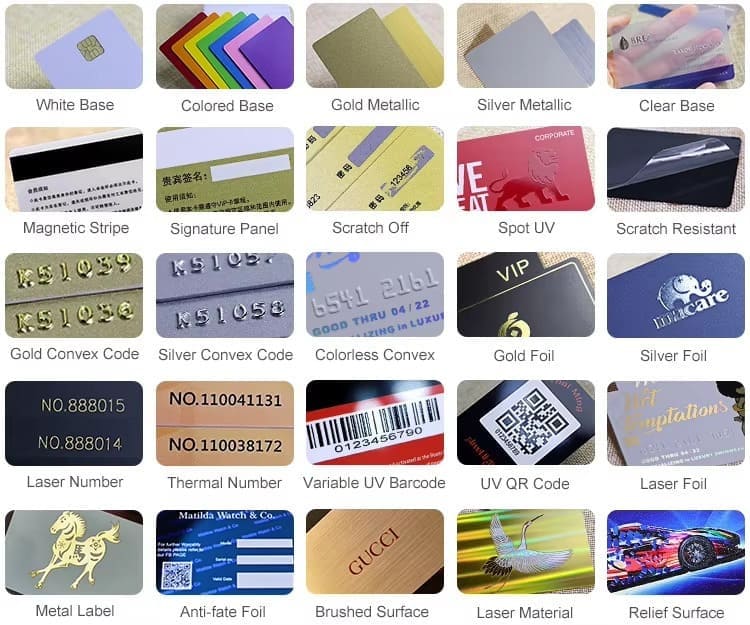
Le PVC est le matériau le plus couramment utilisé pour les cartes RFID en raison de son prix abordable, de sa durabilité et de sa personnalisation aisée. Il est largement utilisé dans les systèmes de contrôle d'accès, les cartes de transport public et les cartes d'identité des employés. Les cartes en PVC résistent à des températures allant de -20 °C à 60 °C, ce qui les rend adaptées à la plupart des environnements. Le PVC est également compatible avec diverses techniques de conception. Par exemple, pour ceux qui recherchent une touche haut de gamme, Meihe… Cartes laser en PVC spécialement traitées " offrent une apparence élégante et incomparable. Ces cartes présentent des graphismes raffinés et des designs éclatants, ainsi que des finitions sophistiquées telles que des revêtements mats, brillants ou UV, ce qui les rend idéales pour les adhésions VIP et les clubs exclusifs.
PET : respectueux de l'environnement et durable
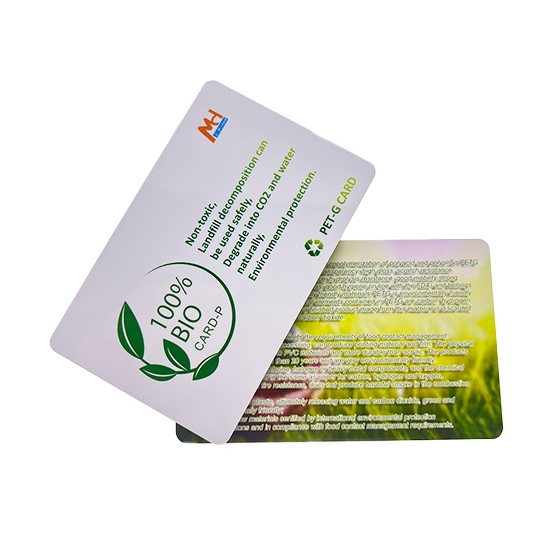
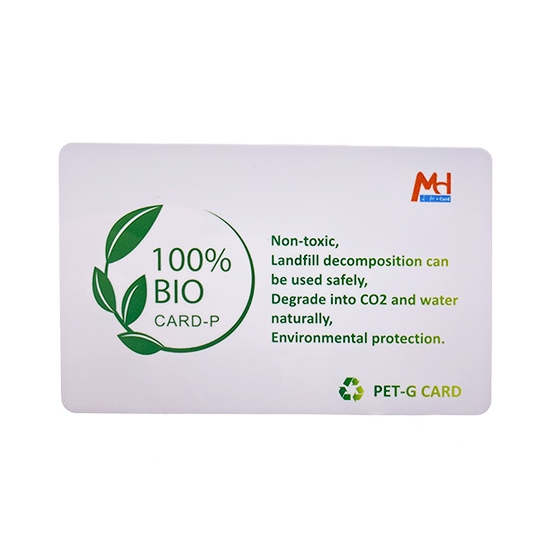
Le PET est une alternative durable au PVC, offrant une durabilité et une flexibilité similaires. Biodégradables et recyclables, les cartes RFID en PET sont idéales pour les organisations soucieuses de l'environnement. Elles sont couramment utilisées pour les programmes d'adhésion et les billets d'événements. Le produit écologique de Meihe en est un exemple notable. cartes en plastique PETG biodégradables , qui allient une transparence élevée, une résistance chimique et une recyclabilité totale. Le PETG se décompose en dioxyde de carbone et en eau, ce qui en fait un choix sûr et durable pour de nombreuses applications.
ABS : haute durabilité de qualité industrielle
L'ABS est un matériau thermoplastique robuste, reconnu pour sa résistance aux chocs et sa robustesse mécanique. Les cartes RFID en ABS sont adaptées aux environnements industriels difficiles, tels que les usines et les chantiers de construction. Elles résistent à des températures et des pressions extrêmes, garantissant ainsi une fiabilité à long terme.
Polycarbonate : sécurité renforcée
Le polycarbonate est un matériau haut de gamme pour les cartes RFID, offrant une durabilité exceptionnelle et des propriétés inviolables. Il est couramment utilisé dans les applications de haute sécurité telles que les cartes d'identité et les passeports. Les cartes en polycarbonate résistent aux températures extrêmes, à l'exposition aux produits chimiques et à l'usure, ce qui les rend idéales pour une utilisation à long terme. Les passeports électroniques américains utilisent la technologie RFID en polycarbonate pour une sécurité renforcée.
Cartes RFID papier : abordables et jetables
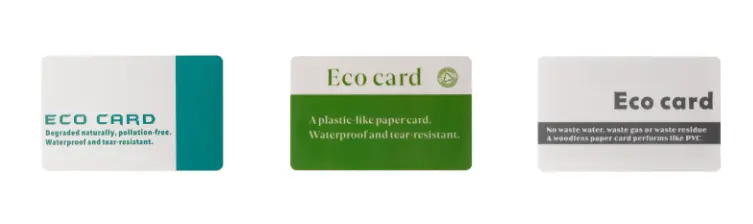
Les cartes RFID papier sont légères, abordables et jetables, ce qui les rend idéales pour des applications à court terme, comme la billetterie d'événements et le matériel promotionnel. Ces cartes sont souvent plastifiées pour une durabilité accrue et peuvent être personnalisées par impression. Cependant, elles ne sont pas aussi durables que les cartes plastiques et ne sont pas recommandées pour une utilisation à long terme. Alternative plus durable au papier, Cartes bio-papier écologiques RFID Combinant la technologie RFID et des matériaux biodégradables, ces cartes se décomposent dans des conditions optimales, offrant une solution écologique pour les applications temporaires.
Cartes RFID compatibles avec le métal : applications spéciales
Les cartes RFID compatibles avec les métaux sont conçues pour fonctionner dans des environnements soumis à des interférences métalliques. Elles utilisent des matériaux spécialisés, tels que des ferrites ou des couches de blindage, pour garantir des performances fiables. Ces cartes sont utilisées dans des secteurs comme l'aérospatiale et l'automobile, où les composants métalliques sont prédominants.
Matériaux biodégradables : l'avenir des cartes RFID
Face à une prise de conscience environnementale croissante, les matériaux biodégradables comme le PLA gagnent en popularité dans la fabrication de cartes RFID. Dérivé de ressources renouvelables comme l'amidon de maïs, le PLA est entièrement compostable. Bien que l'application des cartes RFID à base de PLA en soit encore à ses balbutiements, leur utilisation devrait se généraliser dans le domaine de la protection de l'environnement.
Conclusion : Choisir le bon matériau
Le choix du matériau des cartes RFID dépend de facteurs tels que la durabilité, la sécurité et l'impact environnemental. Le PVC reste le choix standard pour les applications générales, tandis que des matériaux spécialisés comme le polycarbonate et l'ABS répondent aux exigences industrielles et de haute sécurité. La durabilité devenant une priorité, les matériaux biodégradables comme le PETG et le PLA apparaissent comme des alternatives viables. Comprendre ces matériaux et leurs applications peut aider les organisations à prendre des décisions éclairées concernant leurs besoins en cartes RFID.